

If you have a furry pet companion here in Switzerland, chances are, you’ve received some astronomical vet bills. The kind that makes you double check if there is an extra 0. Like most other things in Switzerland, vet costs are definitely much higher than other countries. It can easily set you back a few hundred francs a year or more if your pet gets sick. This is where pet insurance comes in. Like all forms of insurance, a good one can help reduce financial burden and hopefully a peace of mind.
I’m not here to debate whether pet insurance is worth it—that’s a personal choice based on your pet’s needs, your financial situation, and your own peace of mind. Instead, this post is a starting point for anyone researching pet insurance options in Switzerland, with some firsthand experience on what that’s like.
- Costs of average vet visit in Geneva
- Major pet insurance providers in Switzerland
- Do your homework, and make an informed decision
- ✨ Bonus: my personal experience navigating pet insurance in Switzerland
Costs of average vet visit in Geneva
In Geneva, vet costs vary from clinic to clinic, and finding line item pricing may be difficult online. If prices are a concern, you can definitely reach out to the vet clinics directly and ask for their price lists.
Here are some general costs that I have personally received from my vet visits for my cat:
- Basic consultation CHF 60+
- Vaccine shot CHF 75+
- ANIS registration (onetime fee) CHF 35+
- Blood test CHF 100+
- Sterilization CHF 200+ (more for females, less for males)
- Overnight hospitalization CHF 100+
- X-Rays CHF 100-500
Reference prices:
- MVET, a local vet, has published their prices online, which could be a good reference.
- Woofclub
Generally speaking, for a standard check-up with an annual vaccine boost, you’re looking at about CHF 150 for a visit.
From personal experience, when you have a healthy pet, these annual costs are predictable. Once a year vet visits for a routine checkup and updated vaccines are completely manageable. However, the problem arises when your pet gets very sick or an accident occurs.
Taking your pet to a vet in France is also an option, and likely cheaper but less convenient depending where you live. The pet prescriptions between France and Switzerland will also differ.
Some other resources and articles about pet insurance in Switzerland:
- iamexpat goes into the more technical details of pet insurance, though
- Galaxus (in partnership with Calingo) talks about pet insurance in Switzerland from 2023
Some things to consider:
- What’s your pet’s age, breed, and health history? If you get insurance for your pet younger, the premium and costs are significantly lower, and allows you to continue to insure after a certain age. Some insurance companies may reject pets older than 8+ years old (though that policy is also changing!), or the premiums are insanely high. Some breeds of cats and dogs are more prone to getting certain health problems, and the costs for these treatments is something to consider.
- What’s your emergency fund situation? Can you cover a sudden CHF 1,000+ vet bill? Or would you rather put some money aside each month just for vet costs?
Major pet insurance providers in Switzerland
The big players for pet insurance providers in Switzerland are Animalia, Wau-Miau, Epona, and Calingo. Each company has different plans and insurance plans, which comes down to the fine print. Here are just some major overviews to get you started:
- Animalia and Wau-Miau are the two most popular pet insurance companies, and direct competitors. Their fundamental coverage is very similar – the costs of veterinary care for cats and dogs due to accidents and illnesses, with unlimited annual payout for higher tier plans. They have different tiered plans which allows you to choose the coverage and budget that works for you.
- Major Differences:
- Preventative care (vaccines, castration, etc): For Animalia, preventative care is a specific package that can be added to some plans, with an annual limit of around CHF 100. Wau-Miau’s higher tiered packages include preventative care, but with specific annual payout limits for these services.
- Wau-Miau has English language support available, which makes reviewing the detailed policies which may be much easier for non-French speakers.
- Major Differences:
- Epona is a long standing Swiss insurer and the biggest difference is that they do have a maximum payout limit. They also have insurance plans for other pets, like horses, birds, and others. Preventative care is also an add-on package.
- Calingo is a digital-first insurance company that is the newest on the scene, and they have the most interesting offers for pet parents. Key features include: no age limit to sign up, fixed premiums for the pet’s entire life (meaning the cost doesn’t get more expensive as your pet gets older), and the option to add coverage for pre-existing conditions. Plus, they offer monthly cancellation rights, giving you far more flexibility than a standard annual contract. Their English support is also a bonus for those that don’t speak fluent French or German.
Take some time, do your homework, and make an informed decision
- Get direct quotes from each company, using your pet’s animal and breed, so you get an accurate cost to compare. You can also try using comparis.ch to compare just Animalia & Wau-Miau only).
- Decide what budget works for you. And consider your pet’s breed, behavior and medical history – does your dog love eating random things? Does your cat love picking fights with neighborhood cats? Those are all important things to think about. Or maybe you would rather save the insurance money after you discover the costs – totally valid.
- Put on your reading glasses and read the fine print carefully – No one likes reading the insurance policies, but the devil is in the details, you will know exactly what is covered, and what isn’t.
⚠️ THINGS TO WATCH OUT FOR
- Waiting Periods: Don’t get caught out! Most policies have a waiting period (e.g., 30 days) before you can claim for illness. If you have planned check ups or even things like sterilization surgeries, make sure you get the insurance plan at least 30 days before it. Otherwise you’ll run into the unpleasant surprise of having an invoice rejected.
- Franchise/Deductible & Coverage Percentage: Not all costs are 100% covered – you’ll usually pay a ‘franchise’ (deductible) first, and then the insurer covers a percentage (e.g., 80%, 90% or 100%) of the remaining cost, pending on your plan. The higher the deductible, the lower the annual costs are (like humans).
- Increasing premium costs with age: Insurance costs increase as our pets age, but each insurance company increases prices differently – for instance, if you go with Wau-Miau, you can expect a premium increase at 3, 5, 7,9, and 11 years old. Other companies will reserve the right to increase the premium but it may be unpredictable.
- Exclusions: Read the fine print for breed-specific exclusions or common conditions they might not cover.
- Vet Choice: Most of the insurance companies allow you to go to any vet, as long as they are Swiss-accredited but best check if there are limitations.
- Worldwide coverage or just Swiss: If you take your pet abroad often, it’s worth checking to see if there is worldwide coverage available for accidents or vet visits in foreign countries.
- Cancellation period: Some companies require a 3 month advance notice to cancel your insurance policy. Make sure you know how you can get out of an insurance policy, so that there are no unpleasant surprises.
- Insurance for dogs is significantly higher than cats – Insurance for dogs are quite a bit more expensive than cats, like almost 2x the amount. (Sorry dog owners.) If your cat goes outside, their insurance premium also goes up.
My Personal Experience Navigating Pet Insurance in Switzerland
The backstory aka why I decided to get pet insurance
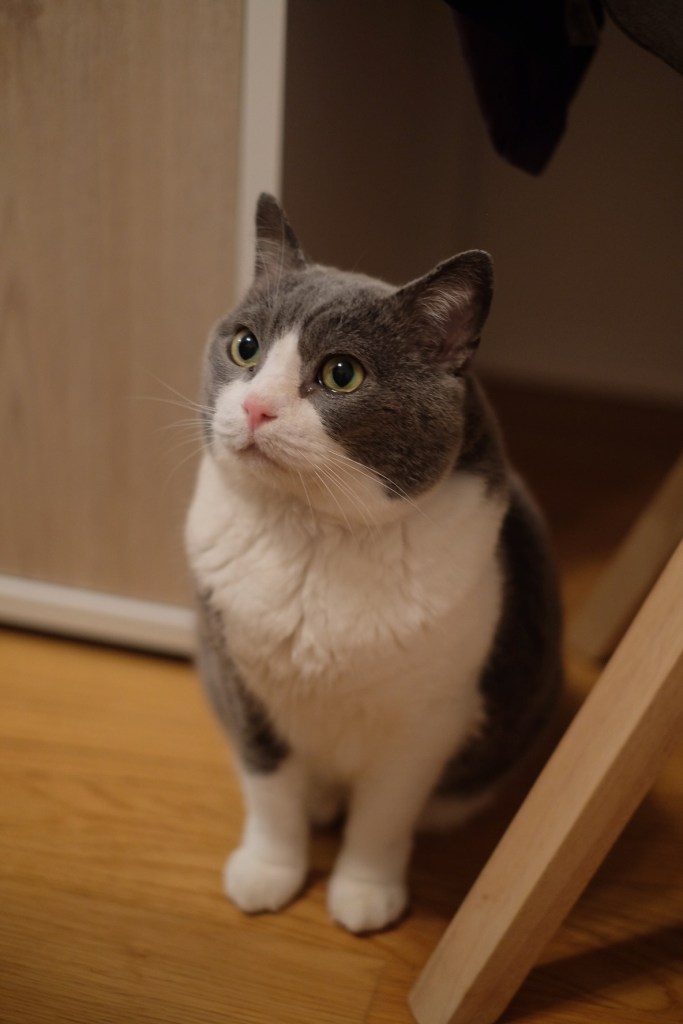
Pet insurance stories always stem from some personal experience of their pet getting sick, and mine is no different. Toba, my 9-year-old British Shorthair struggled with multiple urinary tract blockages during a 6 month period. It was a tough period of time, where we went in and out of the vet multiple times, including emergency care, overnight stays, catheterization treatment, x-rays, medications, specialized urinary care food – the whole work. Urinary tract blockages are common in male cats, and are not breed specific.
It was one of the most difficult times, both emotionally caring for a sick pet and ultimately having to let him go after the 3rd unsuccessful treatment, along with the financial strains that came with the treatments. The vet costs pushed close to CHF 10,000 during that period, with no insurance. We were in a place where we can financially afford the bills, and tried to always give him the best treatment when possible, so he had the best chance of recovering.
After Toba’s passing, I started to look into pet insurance more seriously. We still have two cats, and I didn’t want to find ourselves in a similar situation where we’d be financially in a bad place, on top of an already difficult situation. Because you really never know what accidents or illnesses may occur to our pets, just like humans. One day they are healthy and bouncing off the walls, and the next day they could accidentally break a bone from a bad fall. For me, insurance is for peace of mind. I’m not trying to “break-even” from insurance costs.
I did all the same research as listed above, comparing plans and prices, reading insurance policies. Mostly, I wanted to hear first-hand experience on pet owner’s experience with their insurance companies, how efficient the claims process is, and if the insurance companies really make a huge fuss. Pet insurance is not common in Switzerland, only about 10% compared to countries like Sweden or the UK (80% and 50% for dogs respectively). So trying to read up people’s experiences locally with the insurance companies is basically non-existent. If you try asking in Facebook groups or Reddit, people will automatically just tell you pet insurance is not worth it in Switzerland. 🤷🏻♀️
The Decision
Ultimately, I choose Wau-Miau (this is not a sponsored post) for both my cats. Pricing and coverage-wise, Animalia and Wau-Miau were very very similar. Epona’s plans and coverage weren’t as competitive. Calingo was a close second choice, as their fixed premium pricing was attractive but given that they were a newer provider, I was worried if they would stick around. The winning factor was Wau-Miau’s English support. Yes, I can use Google Translate for policies, but I wanted to ensure there were no misunderstandings in communication, especially if I ever needed to argue a claim confidently in my native language.
The approval process was quick (almost immediately) for my case. No additional follow-up or vet examinations were asked, though it might be different for specific breeds of dogs and cats.
As of time of writing, the annual premium of my 4 year old domestic shorthair is CHF 212, with a deductible of CHF 300. For my 1 year old British shorthair mix, the annual premium is CHF 162, with a deductible of CHF 300. I picked the “clever” plan, which covers accidents and sickness but excludes things like chemotherapy, cost of euthanasia, and special food prescriptions.
The Outcome (so far)…
Wau-Miau has a lot of mixed customer reviews online – many said their claims process was long and tedious. Others online mentioned that their claims were denied or weren’t fully given. So I was definitely a bit anxious after taking out the insurance.
During this year, we had to get our British shorthair kitten sterilized (there is a cap for sterilization costs), vaccinated, and chipped (this is not covered). She also had one emergency vet visit after she stopped eating and drinking. The emergency vet visit itself was already CHF 500 🙈. Our domestic shorthair also had a standard checkup and a minor surgery (roughly CHF 900, inclusive of all the additional treatments) to remove a lump on her neck which turned out benign.
Wau-Miau’s online claim process has been easy and smooth for me. I submitted the detailed invoices from our vet, filled out the form and received 90% reimbursement within two weeks (after the deductibles were met.) No fuss or followup questions. In both cases for our cats, the insurance has really helped with the finances, given that they were both unexpected incidents. From submitting the claims to receiving the reimbursement took 2-3 weeks. Hoping we continue to have a smooth, painless relationship with Wau-Miau in the years to come.
My Final Takeaway
Pets, like humans, can fall sick or get into accidents when we least expect it. So whether you choose to get pet insurance or simply start a dedicated emergency savings fund, the most important thing for any pet owner is to have a plan in place. Your future self will thank you for it!
My decision was rooted in a tough personal experience. What was the defining moment or factor that made you decide to get pet insurance for your pet—or to opt for a different financial plan instead? Leave your thoughts in the comments! 👇





Leave a comment